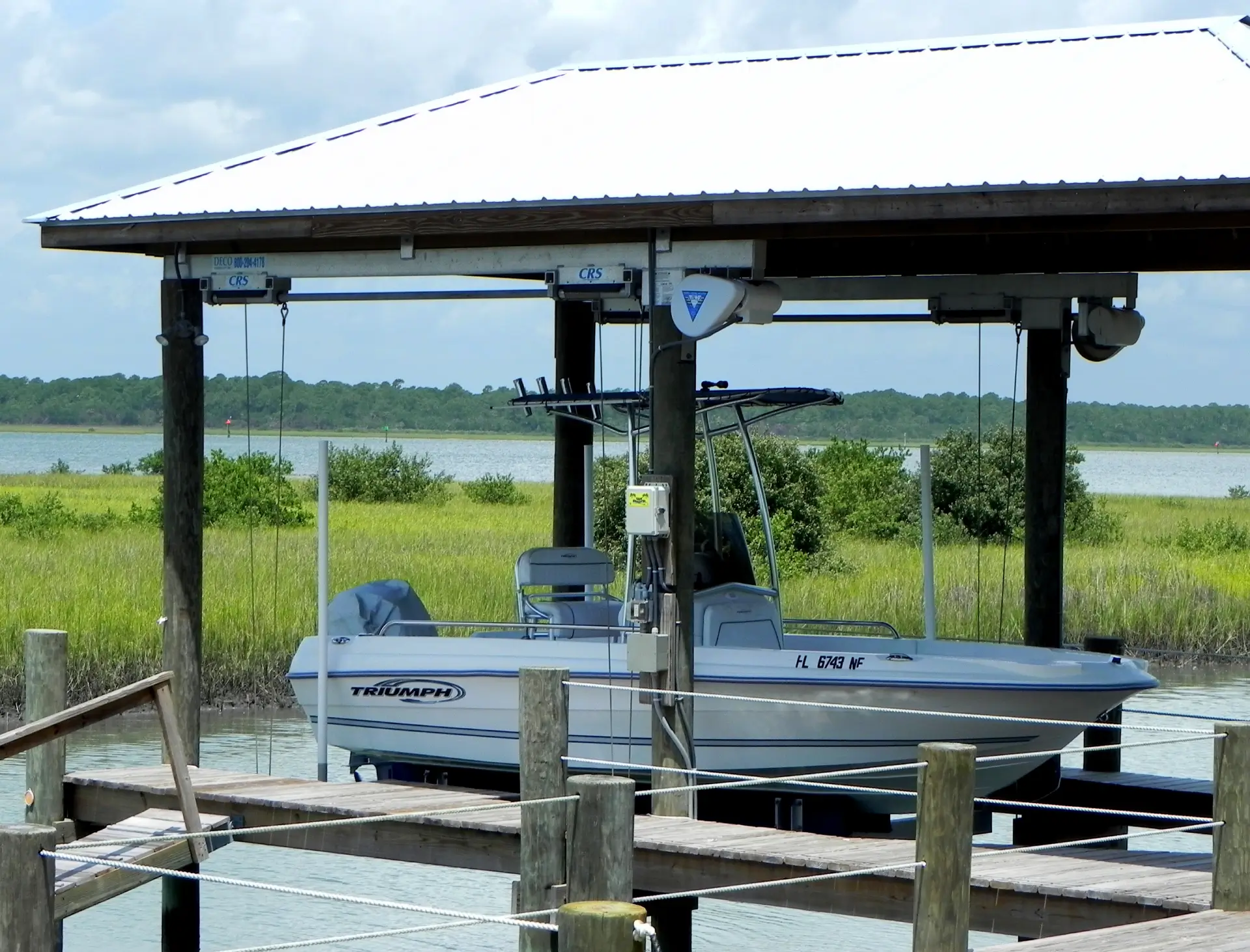



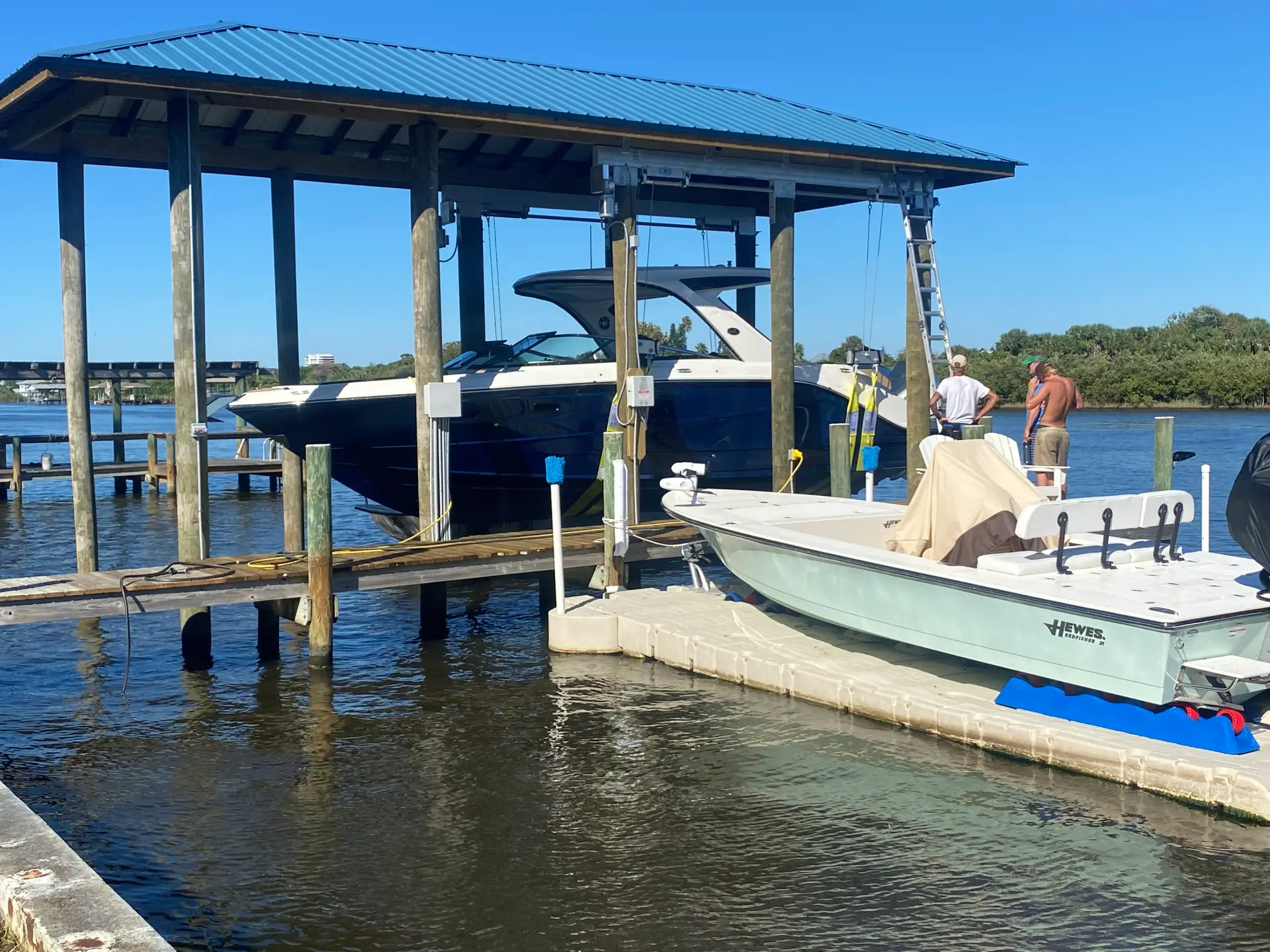
Florida’s waterfront conditions are unforgiving on building materials. Salt air, high humidity, relentless UV exposure, marine organisms, and storm surge all put dock materials under sustained stress that most other environments never produce. Choosing between hardwood docks and composite docks in this climate is a practical question with real financial and maintenance consequences, and the right answer depends on priorities, budget, and how the dock will be used.
What Makes Hardwood Docks a Proven Option in Marine Environments
Tropical hardwoods such as Ipe, Tigerwood, and Cumaru have been used in marine construction for decades because of their natural density and resistance to decay. Hardwood docks built from these species resist moisture absorption, stand up to heavy foot traffic, and hold fasteners reliably over time. Ipe, in particular, carries a Class A fire rating and a hardness rating that far exceeds most softwoods and many composites. These properties make tropical hardwood a defensible choice for Florida waterfront properties where durability is the primary concern. The material performs well in both freshwater and saltwater environments when properly installed and periodically maintained.
Composite Docks Reduce Long-Term Maintenance Demands
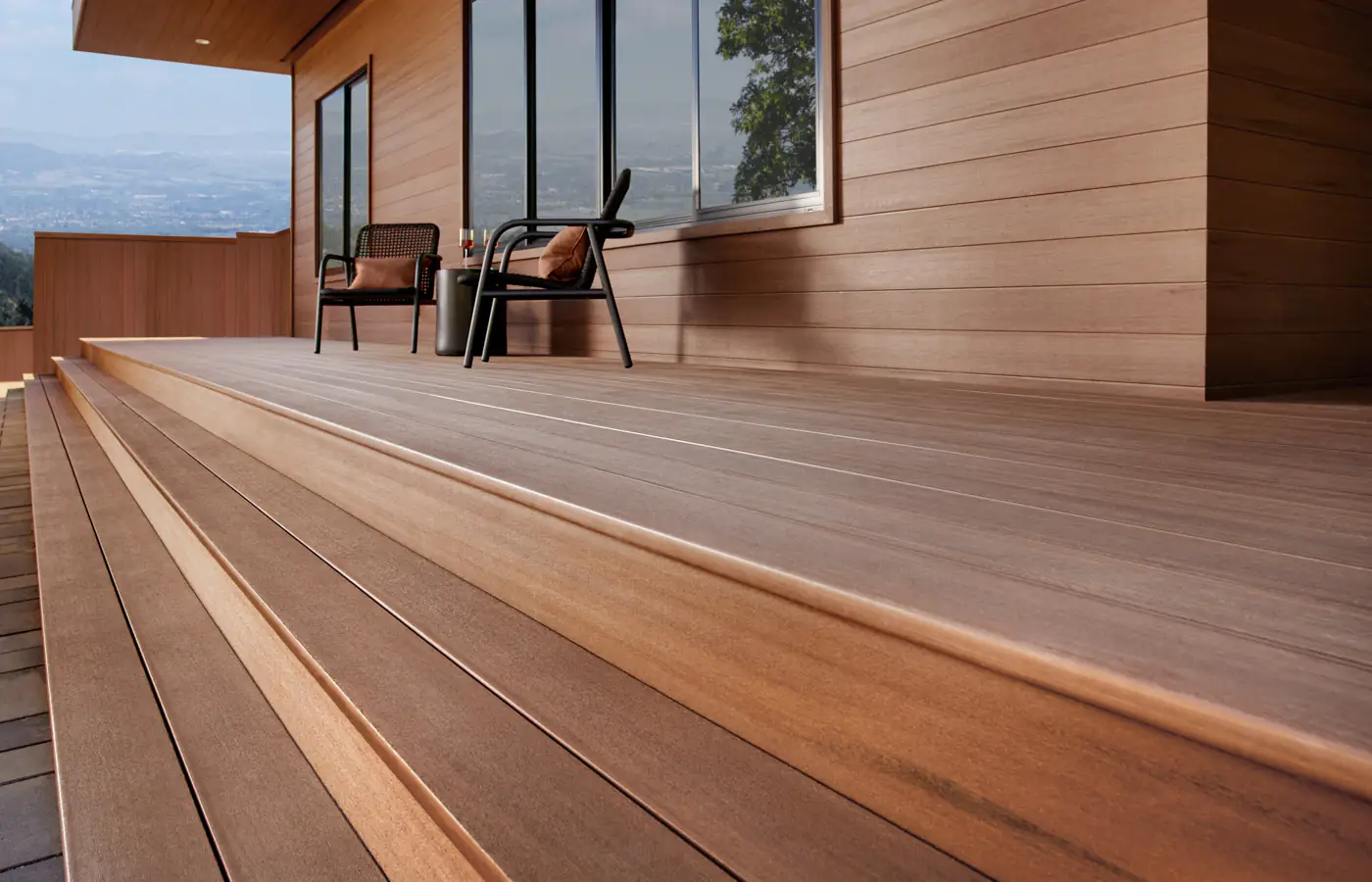
Composite decking used in dock construction combines wood fiber and PVC or polymer materials to produce a surface that resists rot, splintering, and insect damage without requiring sealing or staining. In Florida’s climate, where dock maintenance is complicated by year-round humidity and the cost of working over water, that reduction in upkeep translates directly to lower long-term costs. Composite docks also resist the fading and surface degradation that UV exposure causes over time. Brands such as TimberTech and AZEK produce composite products specifically rated for high-moisture environments, which matters when a dock sits over salt water or a brackish canal year-round.
Hardwood Docks Require More Consistent Maintenance
The durability of hardwood docks depends on regular maintenance. Ipe and similar tropical hardwoods require periodic cleaning and the application of a penetrating oil or sealant to maintain their structural integrity and appearance. Without that upkeep, the surface weathers to a silver-grey color and, over time, can develop surface checks. In Florida’s heat and sun, maintenance cycles are more compressed than in cooler climates. Property owners who are not prepared to commit to a consistent maintenance schedule will find that composite holds its condition better over a ten-year horizon with significantly less effort.
Marine Organisms and Substructure Conditions Affect Both Materials
The decking surface is only part of the equation. In Florida’s coastal and inland waterway environments, substructure materials face biological fouling, tidal fluctuation, and water quality conditions that degrade framing over time. Pressure-treated lumber is the standard for substructure framing on both hardwood docks and composite dock builds, and proper specification of treatment level matters in saltwater versus freshwater applications. The framing below a composite surface faces the same biological pressures as one below a hardwood surface, so substructure quality cannot be overlooked regardless of what decking material is chosen for the walking surface.
Cost Differences Factor into the Decision Over Time
Tropical hardwood typically carries a higher upfront material cost than standard composite, though premium composite products close that gap considerably. Over a ten-to-fifteen-year period, the maintenance costs associated with hardwood docks, including cleaning, sealing, and occasional board replacement, can exceed the savings realized at installation. Composite products often carry manufacturer warranties that cover fading, staining, and structural integrity, which provides some predictability in long-term cost planning. For commercial dock builds or marinas where downtime for maintenance is operationally disruptive, composite becomes more attractive purely on logistics.
The Right Choice Depends on Project Goals and Water Conditions
There is no universal answer that applies to every Florida waterfront project. Hardwood docks remain a strong choice for property owners who want a premium natural material, are willing to maintain it properly, and are working in environments where the substructure can be designed to manage biological exposure. Composite docks suit property owners who prioritize lower maintenance, consistent appearance over time, and predictable long-term costs. Both materials are viable in Florida waterways when specified and installed correctly, and both require the same attention to permitting, foundation installation, customization for local water conditions, and structural design that any quality dock build demands.
Ready to discuss dock options for your St. Augustine property?
Contact Maritime Docks and Decks to schedule a design consultation.
Maritime Docks and Decks
701 Market St STE 111, St. Augustine, FL 32095
+1 386 693 4884