


Building a dock on the Intracoastal Waterway in St. Augustine sounds straightforward until you start. Then you discover that dock installation along this stretch of Florida involves layered permits, tidal calculations, sovereign submerged lands, manatee zones, and a federal agency that does not move quickly. This guide walks through every stage so you understand what you are signing up for before the first piling drops.
Why St. Augustine Dock Installation Is Different
Most waterfront property in St. Augustine sits along the Intracoastal Waterway, or one of the tidal creeks that feed into them. These waters are federally regulated. That single fact changes everything about how dock installation works here compared to inland lake projects in other parts of Florida.
The Intracoastal is a navigable federal waterway, which means the U.S. Army Corps of Engineers (USACE, often shortened to ACOE) has jurisdiction over any structure extending into or over the water. Add Florida Department of Environmental Protection oversight, sovereign submerged lands leasing through the Board of Trustees, St. Johns County building requirements, and seagrass and manatee protection rules, and you have a regulatory stack that takes months to navigate even on a clean site.
Stage One: Site Review
Before anyone draws a dock plan, a qualified contractor needs to walk your shoreline at low tide and again at high tide. The site review establishes the facts that will drive every later decision.
Key things assessed during this stage include water depth at mean low water (critical for boat draft and federal channel setbacks), bottom composition (sand, mud, oyster beds, or seagrass), shoreline type (bulkhead, riprap, natural marsh, or mangroves), distance to the federal navigation channel, distance to neighboring docks and riparian lines, and presence of seagrass beds or oyster reefs in the footprint.
If seagrass shows up in your proposed dock footprint, expect the design to change. Florida and federal agencies will not approve a dock that shades significant seagrass beds without extensive mitigation, and most homeowners abandon the original footprint rather than fight that battle.
Stage Two: Design and Engineering
Once site conditions are documented, design begins. A St. Augustine dock typically includes an access walkway, a terminal platform, and either a boat lift or mooring piles. The design has to satisfy several competing constraints at once.
Walkway width over wetlands is capped at four feet in most cases to limit shading impact. Terminal platforms have square footage limits tied to your shoreline length. Total dock length is governed by water depth requirements and the federal channel setback, which generally requires that no structure extend into the marked navigation channel or its setback buffer.
Pilings need to be sized for the load and driven deep enough to resist storm surge. In St. Augustine, that means designing for hurricane conditions, not fair-weather loads. A properly engineered dock in this area uses pilings driven well past refusal, with through-bolted hardware rated for marine exposure.
Stage Three: The Permit Stack
Here is where dock installation in St. Augustine gets serious. You are not pulling one permit. You are pulling several, sometimes in parallel and sometimes sequentially, and a delay at any layer stalls the whole project.
Army Corps of Engineers Permit
The ACOE permit is the one that scares people, and for good reason. The Corps reviews under Section 10 of the Rivers and Harbors Act (because the Intracoastal is navigable federal water) and often under Section 404 of the Clean Water Act as well. For most private single-family docks, the project qualifies under a Nationwide Permit, usually NWP 13 for shoreline stabilization or NWP for residential docks, which is faster than an individual permit.
Even a Nationwide Permit requires the Corps to coordinate with the National Marine Fisheries Service for protected species review (manatees, sea turtles, smalltooth sawfish) and with the State Historic Preservation Office. Realistic timelines for ACOE review run from 60 to 120 days for a clean nationwide application, longer if anyone in that chain has questions.
Florida DEP and Submerged Lands
Florida owns the bottom of the Intracoastal Waterway. To put pilings in state-owned submerged land, you need either a Letter of Consent (for small private docks meeting specific size limits) or a lease (for larger structures). FDEP handles the Environmental Resource Permit, and the Board of Trustees handles the submerged lands authorization, though both run through the same application pathway.
St. Johns County Building Permit
Once you have federal and state approvals in hand, St. Johns County issues the local building permit. The county verifies that your approved plans match what was federally and state-permitted, checks structural calculations, and confirms compliance with local setback and height rules. This is usually the fastest piece, but only because it comes last.
Homeowners Association Approval
If your property sits in a deed-restricted community, HOA architectural review can run in parallel with permitting. Some St. Augustine HOAs have stricter rules than the agencies do, particularly around boat lift covers, dock lighting, and roof structures.
Stage Four: Construction
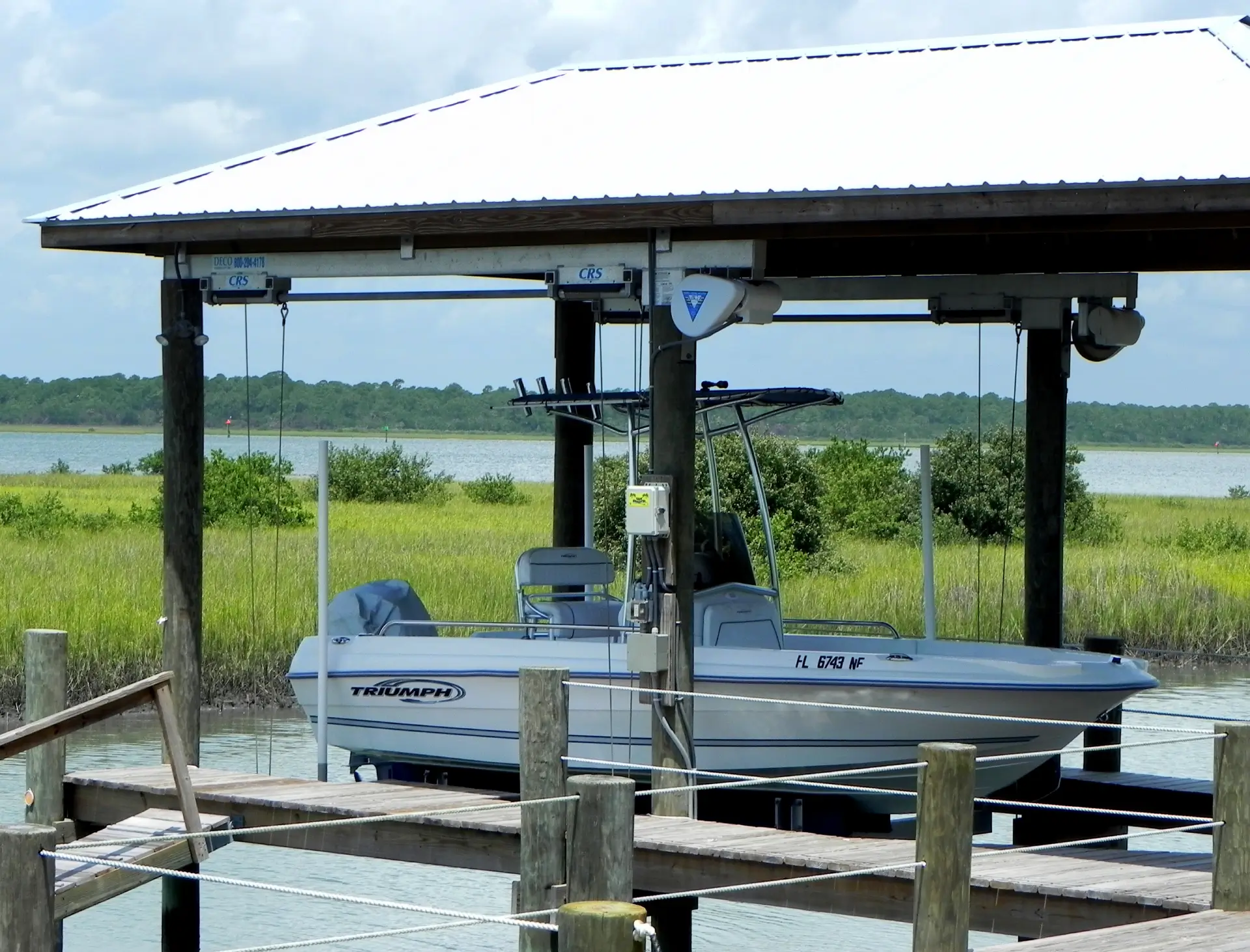
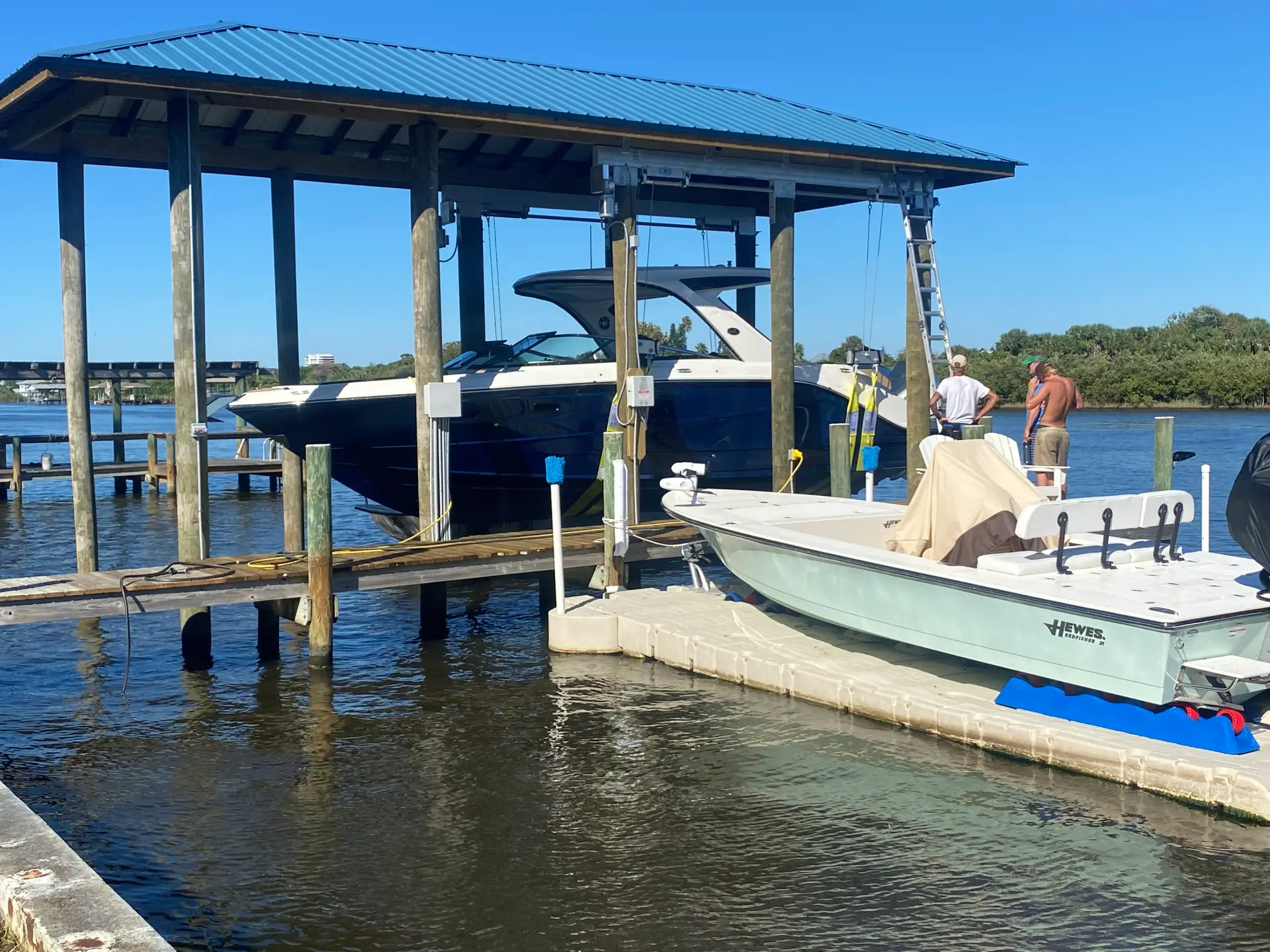
With permits issued, construction can finally start. A typical dock installation crew will mobilize a barge or jack-up rig depending on water depth and access. Pilings get driven first, then the framing, decking, and any boat lift hardware.
Construction sequencing matters more than people realize. Pilings should be driven during periods that avoid known manatee aggregation times where applicable, and turbidity controls need to stay in place throughout. Inspectors from the county will visit at framing and final, and any deviation from the permitted plans has to be addressed before the final sign-off.
Weather is the wildcard. Summer afternoon storms, named tropical systems, and king tides can all push a two-week build into a four-week build. Build that buffer into your expectations.
Stage Five: Launch and Final Inspection
The final inspection covers structural compliance, electrical work if you have a lift or dock lighting, and confirmation that the as-built matches the permitted drawings. Once the county signs off, the dock is yours to use.
Before you tie up the first boat, walk the structure with your contractor. Check that all through-bolts are tight, that decking has no protruding fasteners, that the boat lift cables are properly seated, and that any electrical disconnects are accessible and labeled. Document the finished dock with photos for insurance and for your own records.
Realistic Timeline and Cost Expectations
For a standard residential dock installation on the St. Augustine Intracoastal, plan on six to nine months from initial site review to launch. The permit phase typically eats four to six months of that window. Construction itself runs two to six weeks depending on size and complexity.
Costs vary widely with length, water depth, lift capacity, and site access, but St. Augustine dock installation pricing has climbed steadily with material and labor costs. Expect to invest substantially more than equivalent projects on smaller inland waters.
Choosing the Right Contractor
The single biggest predictor of a smooth dock installation is the contractor’s experience with St. Augustine waters specifically. A builder who works the Intracoastal regularly knows which ACOE reviewers ask which questions, which seagrass surveys hold up, and how to sequence permits so nothing sits idle.
Ask your contractor for their last five Intracoastal dock permits, the timeline each one took, and references from those specific homeowners. A contractor who hesitates on that question is not the right fit for a project this regulated
Dock installation in St. Augustine is not a weekend project. Done right, it produces a structure that survives decades of tides, storms, and sun. Done wrong, it produces a violation notice from the Corps and an expensive teardown. Take the time to plan it properly, and opt for Maritime Docks and Decks as your contractor. With our in-house permitting team and expertise with Intracoastal waterway construction, we make your docks right.